
Feeling nervous before an interview? That’s completely normal!
Strong preparation works better than any other method for fighting pre-interview anxiety. Plans in place will create confidence, which enables smooth answers while making a memorable impact regardless of your status as a first-time job candidate or experienced professional.
This guide provides comprehensive job interview guidelines alongside practical examples that help you produce outstanding answers to interview questions seamlessly.
Interview Preparation Steps
A successful interview starts with adequate preparation. Here are some essential steps:
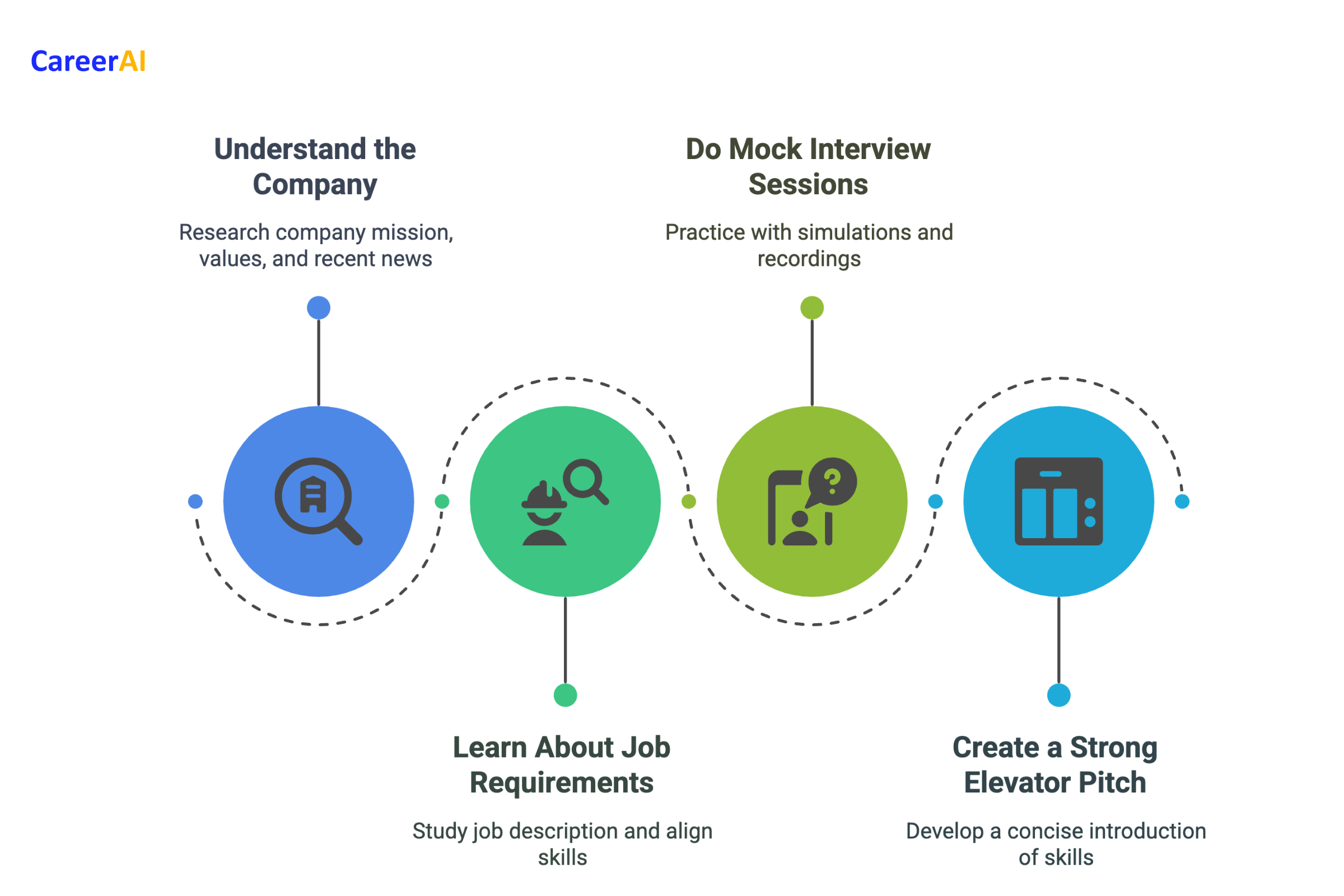
1. Understand the Company
Understand the Company Your understanding of the company's mission and values, combined with recent developments, will position you better than other applicants. Professional recruiters at Google and Amazon seek job candidates with a proven understanding of the company's work culture. Check the company website while reviewing recent news and reading employee reviews posted on Glassdoor.
2. Learn About the Job Requirements
Study the job description carefully. Take time to understand all necessary skills and responsibilities before reflecting on experiences which demonstrate these qualities. Your answers should align with the job requirements and clearly show your suitability for the role. Just like many professionals use CareerAI’s Job Scan feature, which not only rates how well your resume matches a specific job but also helps you tailor it accordingly. Using that, along with crafting responses that connect your past experiences to the role’s needs, makes it much easier to showcase your fit effectively.
3. Do Mock Interview Sessions
Mark Zuckerberg dedicated his public speaking skills to extensive practice because he viewed it as equally important to major external obligations. Real interview simulations help you improve your interview capabilities in a similar way. Use practice interviews with your friend or create recordings of your answers to typical questions.
4. Create a Strong Elevator Pitch
During an interview, you should present in a small speech what you've achieved professionally with your expertise and work goals. Experienced professionals use this strategy to introduce themselves at the very beginning of an interview, when the initial question is, "Tell me about yourself." A built-up pitch at the start of your interview lets an interviewer know quickly about your professional achievements and how you match the open position. The pitch should contain essential points about you and your career in about one minute. Learn more!
Example of Elevator Pitch
“I have served as a marketing specialist for six years, specializing in digital strategies and brand development. My skills focus on launching data-based marketing initiatives to increase brand exposure among customers. The content marketing initiative I led in my last position generated a 40% boost in organic traffic over six months. My experience with analytics gives me the ability to improve marketing strategies for optimal results. I want to bring my results-focused approach to your team to help your company advance.”
Body Language & Communication Tips
During interviews, what you say and how you say it both matter. Good communication isn’t just about words—it includes body language and tone too. The next section will explain these in detail.
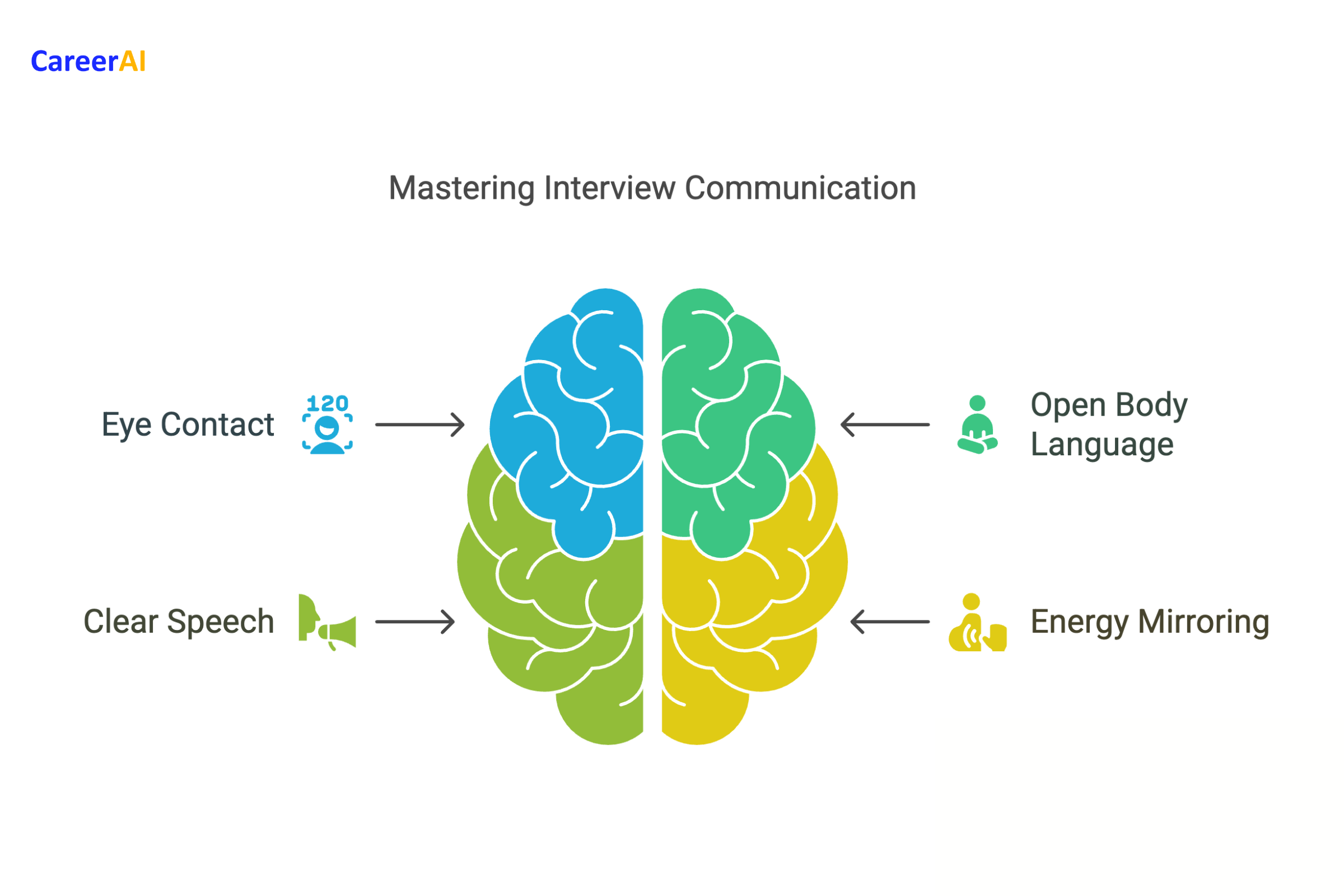
1. Maintain Eye Contact
Eye contact is one of those small things that makes a big impact in interviews. It shows you’re confident, credible, and engaged. On the flip side, looking away too much might make you seem unsure or uncomfortable. But don’t overdo it either—staring can come off as intense. Just keep it natural. Look at the interviewer for a few seconds at a time, and feel free to glance at your notes if needed.
Pro tip: If you’re doing a virtual interview, try looking at the camera lens—not the screen. It might feel weird at first, but it helps the interviewer feel like you're making direct eye contact.
2. Use Open Body Language
How you sit and move says a lot. Interviewers will interpret body signals that involve arm crossing, leaning back or slouching as defensive or lacking interest. Your body position needs to remain open without appearing reserved. Round your shoulders to adopt a straight posture while your arms should rest relaxed either on your lap or visible on the table. Your interest in the discussion becomes evident when you lean forward just a bit while creating a positive impact. Having your arms uncrossed shows the interviewer you are willing to participate and be engaged in the discussion.
Pro tip: Your active engagement with the interviewer will become clear through simple nods to show you understand all their points. Dialogue takes on the form of mutual exchange in this way instead of remaining limited to a question-and-answer format.
3. Speak Clearly and Confidently
How you speak in an interview shapes how the interviewer sees you. Speaking clearly and confidently helps you come across as professional and prepared. Avoid filler words like "um," "uh," and "like"—they can make you sound unprepared or nervous. Speak at a steady pace, and take your time to think before answering. The way you communicate both verbal statements and their clear objectives demonstrates your confidence when speaking.
Pro Tip: If you're nervous, take a deep breath or pause before responding. It helps you stay calm and organized.
4. Mirror the Interviewer’s Energy
It is essential to mirror how the interviewer speaks and moves their body because this practice establishes trust and creates an ideal speaking environment. A relaxed, conversational interview style from the interviewer allows you to reduce formality in how you present yourself. Your ability to match their energy creates the perception of empathy and adaptability, which both matter highly in team-based work settings.
Pro Tip: You should monitor their facial expressions along with their body language because such cues help you decode their current state of feeling. Your approach can match their positive yet engaged attitude but you should simplify your answers when they exhibit tension or distraction.
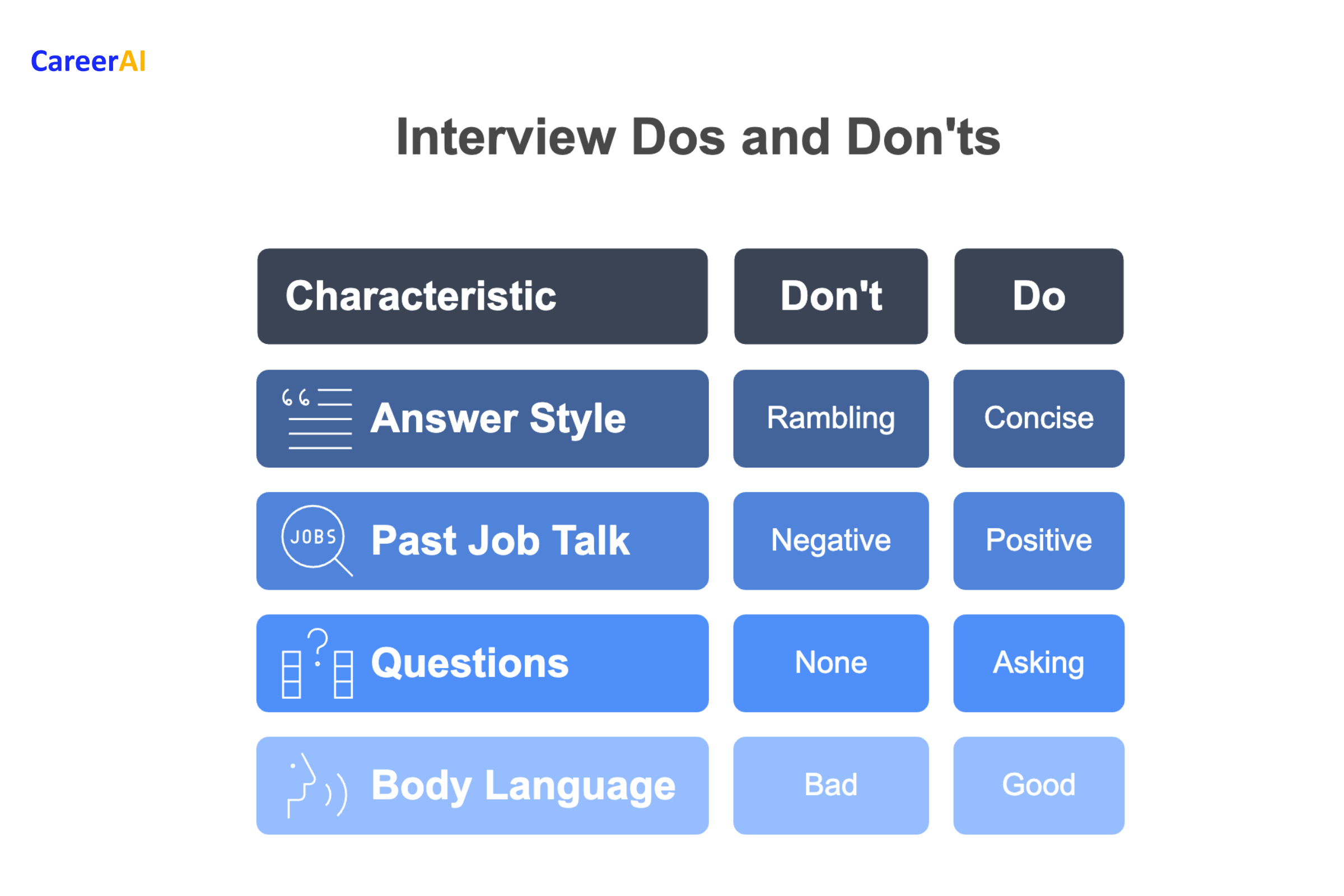
Avoid these Interview Mistakes at Any Cost!
1. Don’t Ramble - Keep answers short and sweet. Get to the point, then connect it to the job!
2. Don’t Trash Past Jobs - Stay positive. Talk about what you learned, not the drama.
3. Not Asking Questions - Show you care! Ask smart questions about the role or company.
4. Ignoring Body Language - Sit up straight, make eye contact, and no fidgeting! It shows confidence.
Common Interview Questions
1. "Tell me about yourself."
- Do: Keep it professional. “My expertise in marketing spans five years, during which time I boosted brand engagement through my campaigns to reach a 40% increase.”
- Don’t: Share unnecessary personal details.
2. "What is your biggest weakness?"
- Do: Honesty should be combined with demonstrated progress. “Public speaking used to be a challenge for me before I enrolled in classes which taught me how to become the leader of team presentations.”
- Don’t: Say you have no weaknesses—it sounds unrealistic.
3. "Why should we hire you?"
- Do: Highlight your strengths. "The sales growth I delivered at my former position amounts to 30%, and I want to apply this ability towards business growth."
- Don’t: Give a generic response like, "Because I need a job."
4. "Where do you see yourself in five years?"
- Do: Show ambition. "My future professional development includes taking on leadership responsibility to mentor colleagues and assist in critical organizational choices."
- Don’t: Say, "I don’t know." Employers want candidates with goals.
5. "What drives you to do your best work?"
- Do: Focus on your passion for the role and industry. "My motivation stems from finding solutions to tough problems while serving my team members."
- Don’t: Mention personal motivations like money or external pressures.
6. "How do you handle stress?"
- Do: Share strategies you use to stay calm and focused under pressure. "I transform complex assignments into smaller actionable steps while establishing logical priorities. The approach includes scheduled brief pauses that enable mental clarity.
- "Don’t: Say you don’t get stressed—everyone does at some point.
7. "Can you tell me about a time you worked in a team?"
- Do: Use the STAR method, which consists of Situation, Task, Action, and Result, to present detailed information on a collaborative work experience. “My last job required me to work with a cross-functional team that launched a new product. Our team hit all deadlines while surpassing expected sales numbers.
- "Don’t: Mention a time when you worked alone or avoid talking about team conflict.
8. "How do you handle criticism?"
- Do: You recognize feedback as a chance to progress, which you demonstrate through your actions. “I appreciate getting constructive feedback since it enables me to grow. During a feedback session, I used the time to enhance my project management abilities."
- Don’t: Say you don’t take criticism well or get defensive.
9. "Why did you leave your last job?"
- Do: When pursuing new opportunities, focus on the positive aspects of your career development plan. “I am searching for a position which better serves my future professional objectives and provides elevated responsibilities.”
- Don’t: Badmouth your previous employer or talk about personal reasons.
10. "How do you prioritize tasks?"
- Do: Explain your approach to organizing and prioritizing work. "I organize work by using multiple task management tools and base my priorities on the deadline schedule and job importance. I look at my tasks once each day to maintain my direction."
- Don’t: Say that you’re unable to prioritize or get overwhelmed easily.
11. "What makes you a good fit for this role?"
- Do: The hiring team wishes to know which qualifications make you perfectly suitable for this position. Show how your qualifications match the work specifications. “My background in the marketing industry and my focus on data analytics for campaign leadership qualify me to boost your company's brand recognition.”
- Don’t: Speak vaguely about your qualifications or try to provide an answer that sounds too generic.
12. "Tell me about a time you solved a problem at work."
- Do: Provide one particular work situation where you encountered difficulties, followed by the steps you took to resolve the matter. “A technical problem created delays for an active project when I worked at my previous organization. I partnered with the IT team to discover a solution which helped maintain project timelines."
- Don’t: Focus on a situation where you didn’t contribute or failed to resolve the issue.
13. "What do you know about our company?"
- Do: Display to the interviewer how well you prepared for the application process. “Your organization supports sustainability initiatives through recent developments in your manufacturing processes with green objectives. Your environmental responsibility demonstrates my great admiration.
- Don’t: Give generic answers like, "I know you're a leader in the industry," without specifics.
14. "What are your salary expectations?"
- Do: Regularly investigate the normal earnings of this position for your location. “I seek a salary between $X and $Y, which aligns with my skills and current market standards.”
- Don’t: Give a figure that’s too high or too low without justification.
15. "How do you stay updated with industry trends?"
- Do: Specific resources and methods should be mentioned in this reply. “ stay updated on current industry trends through my participation in industry blogs, my attendance at webinars and my observation of influential leaders on LinkedIn.”
- Don’t: Say you don’t follow any resources or keep up with the latest trends.
Real-World Example
How Jeff Bezos Aces Interviews
Jeff Bezos leads Amazon's recruitment strategy by seeking candidates who possess qualities that match his company's leadership principles. He asks behavioural questions like:
“Describe to me an occasion when you chose to take significant risks.”
"How do you handle failure?"
The interview process at tech companies usually includes scenario-based questions as one of their main assessment methods. Rephrase problems by demonstrating your ability to solve complex situations together with your ability to recover from adversity.
CareerAI.io: The First Step to Interview Success
Confidence comes with preparation. You can generate powerful resumes and cover letters with CareerAI AI-driven platform to secure an interview, but the final win depends on your performance in these meetings.
Preparation in interview settings, together with proficient job interview tips and effective response delivery to interview queries, will enhance your job acquisition potential.
Key Takeaways
1. Prepare Thoroughly: Know the Company and Position along with its specified Requirements before starting. Research the values and goals of the company for an interview to deliver personalized responses that will help you shine in the process.
2. Practice Makes Perfect: Professional pre-interview exercises enable participants to boost their self-assurance and refine their skills. Create multiple interview simulations to practice stress management while improving your responses.
3. Master Your Elevator Pitch: Create a short but memorable introduction that showcases your background together with your capabilities and professional targets because this establishes your initial impact on interviewers.
4. Non-Verbal Communication Matters: When communicating non-verbally, you should display confident body language while keeping good eye contact with direct speech communication. The way you deliver your responses is equally important to the information you provide during the interview.
5. Avoid Common Mistakes: Make a positive impression through direct statements that exclude negative comments about previous employers. Conduct thoughtful questions while keeping an eye on your body language.
6. Showcase Adaptability and Positivity: Displaying adaptability along with positivity combined with genuine interest in the position and company will position you as a candidate among other applicants.